
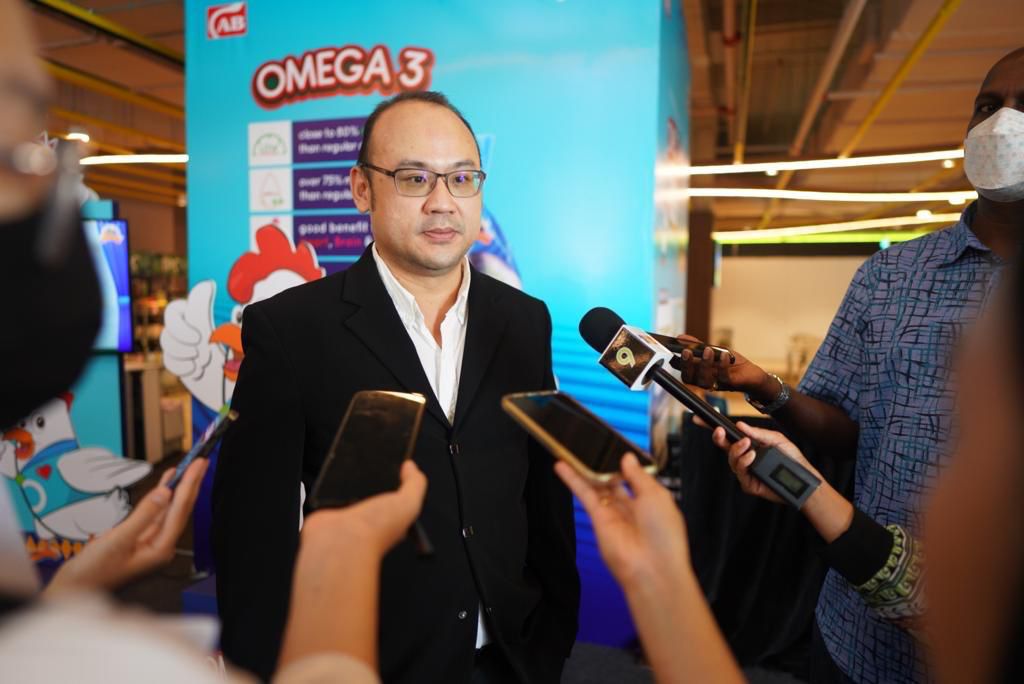
Christopher Chuah Hoon Phong, Managing director of CAB Cakaran Corporation Berhad, answering questions by reporters during a press conference.
By TEE LIN SAY
linsaytee@suketv.com
09 March 2026
PETALING JAYA: The climate in global markets have never been more uncertain. Political risk looms heavily, the war in Iran is still rippling, and China just lowered its annual economic growth target to the lowest level since 1991.
Once market darlings, big tech stocks have now been underperforming for months on fears of displacement from artificial intelligence. Its a dangerous world out there.
Being safe and boring has never been hotter. It is on this note, that the food sector has never looked better. Growth may not match that of the tech sector, but it is recession proof and unaffected by trends. Rich or poor, everyone’s just gotta eat.
The resilience of a food company is especially apparent when it has operations encompassing the entire value chain from the upstream to the downstream.
For an integrated poultry producer like CAB Cakaran Corporation Berhad, that has been operating for more than 50 years, the sturdiness of its business is apparent in its size and growth over the decades.
From a simple small business selling chicken in the wet market of Penang by its founder Chuah Ah Bee, the company today produces roughly 6.5 million birds per month.
CAB operates an extensive network of farms across Penang, Kedah, Perak, Negeri Sembilan, Melaka and Johor, with broiler farms located throughout Peninsular Malaysia, making it one of the most diversified and fully integrated poultry producers in the country.
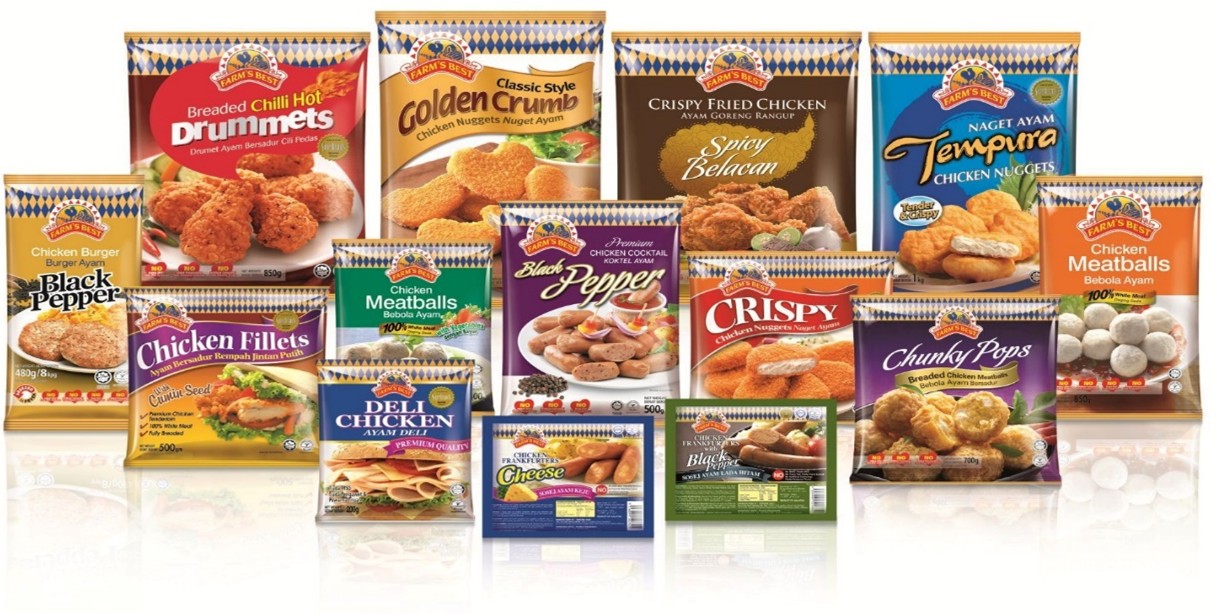
Some of CAB's food products
Of course it isn’t just selling chickens anymore. On the mid stream, its activities include processing live broilers into fresh chicken and chicken cuts, as well as producing value-added products such as nuggets, sausages, burger patties and deli meats marketed under established brands including Likes, AyamLikas, Farm’s Best, Segaria, Rasaria, Hennie’s, Garing and others.
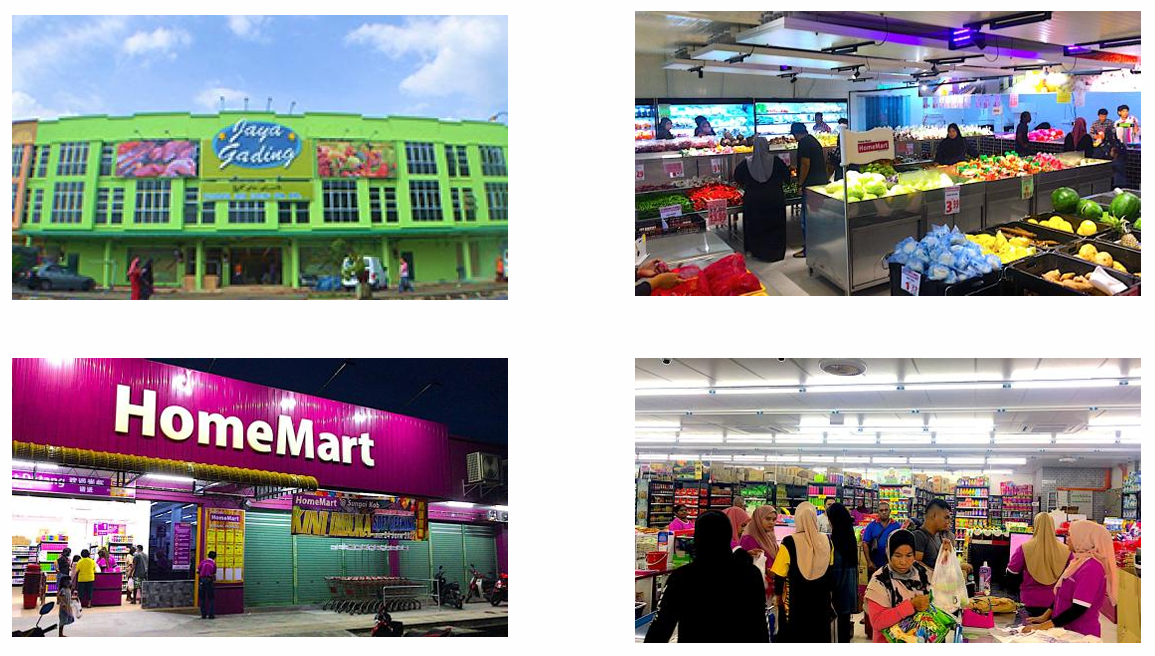
Retail supermarkets Jaya Gading and Home Mart belong to CAB Cakaran, and are located in small towns and city outskirts
Further downstream, CAB manages retail chains through Pasaraya Jaya Gading Sdn Bhd and Home Mart Fresh and Frozen Sdn Bhd.
At this moment, CAB operates 19 medium-sized supermarkets across Pahang, Kelantan, Kedah, Penang and Perak. It has much larger ambitions to open another 50 – 100 outlets over the next five years. Who knows. This could be a separate listing on its own in the future.
Even with all that, CAB continues to acquire new assets. 2025 was a landmark year as it executed two major developments. First, there was its 100% acquisition of animal feed company Cargill Feed Sdn Bhd for RM231mil. The other was the commencement of its much delayed venture into the Indonesian market with its partner, The Salim Group.
“Acquiring
Cargill was a coup for us. We did not expect this opportunity to come to us. The
acquisition transformed our profile overnight. From a buyer of feed, we became owners
of multiple feed mills in Malaysia,” said CAB Cakaran managing director Christopher Chuah Hoon Phong. He is the eldest son of Chuah Ah Bee.
As for the Indonesian venture with Salim, again it was Salim that came knocking on their doors.
“We would never
dream of venturing into the Indonesian market if the Salim Group had not
approached us. The Salim Group is a giant, one of Indonesia’s largest conglomerates. They have the reach, the
network, and the ready customer base. Now they need our expertise. How can we
say no to them,” said Chuah
Financials wise, CAB recorded net profit of RM90.65mil for its financial year ended Sep 30, 2025 (FY25). The company looks poised, or is at least close, to crossing the RM100mil mark in terms of net profit, in the near future.
The company last posted RM107.25 mil in net profit in FY23, but that was with government subsidies. CAB has now been operating for nine consecutive quarters without subsidies.
As it is, poultry makes up some 85% of CAB’s earnings. Food processing makes up the remainder, and this segment is expanding fast.
CAB currently has two food processing plants in Malacca and Segambut, Kuala Lumpur with a combined capacity of 1,000 tonnes a month.
Both plants are operating at full capacity. “We
have spent the last year refurbishing our third food processing plant in Nibong
Tebal, Perak, and are looking to commence operations in the second quarter.
We
needed a third plant as our current two plants cannot cope with new orders and
are at maximum capacity,” said Chuah. He
adds that the plant will give them 1,500 tonnes per month of capacity. In
other words, its total food processing capacity will increase by 150% to 2,500
tonnes per month.
The
earnings accretive acquisition of Cargill in July 2025
On
July 31, 2025, CAB Cakaran acquired a 100% stake in Cargill Inc’s Malaysian
Feed Arm, Cargill Feed Sdn Bhd (CFSB) for RM231mil.
This
acquisition is earnings accretive, meaning CAB will recognize earnings upon the
completion of this deal. This
deal was completed on Nov 28, 2025. CFSB delivered net profits of RM13.78mil in
FY2024.
Chuah
is extremely upbeat on this deal, as not only is it earnings accretive, but
there is huge room to grow for its demand.
“For
now, CAB Feed has a combined capacity of 31,200 tonnes per month across our
four plants in Butterworth, West Port, Malacca and Sabah. Our own internal feed
consumption is around 30,000 tonnes per month, so the current capacity is
definitely not sufficient,” said Chuah.
This is why CAB will be investing RM30mil to install additional production lines in each of its Peninsular Malaysia plants, therefore adding 10,000 tonnes per month, for 3 plants.
This would give it an additional 30,000 tonnes per month, and hence increase total capacity to about 61,200 tonnes per month, once this installation is completed.
The
Indonesian operations with The Salim Group finally happens
Meanwhile,
after an eight year delay, CAB Cakaran announced on Nov 3, 2025, that it was
finally kickstarting its Indonesian operations with partner, Indonesia’s
biggest conglomerate The Salim Group, in the second quarter of 2026.
Salim Group owns
15.2% equity interest in CAB Cakaran through Plant Wealth Holdings Ltd.
Both
CAB Cakaran and The Salim have agreed to adopt a new 5-year business plan, of
which phase 1 involves an investment of US$10 million (RM45mil) for the setting
up of a food processing plant, excluding cost of land and factory building,
which will be leased.
The
5-year business plan will cover the implementation of the fully integrated
poultry business in Indonesia. The Salim
Group’s network and reach in Indonesia is wide.
Within the food
industry, Salim’s assets include Indomaret, Indonesia's largest convenience
store chain with 22,400 outlets, Indofood Sukses Makmur, the world’s largest
instant noodle producer, and Bogasari, Indonesia’s biggest flour miller.
It does not have poultry operations.
“The plan is to convert one of Salim Group’s existing factories to process halal poultry products for the Indonesian market. This enables operations to start without building a factory from scratch or to wait for the entire broiler farm facility to be ready. We should see some small maiden contributions from our Indonesian food processing division this year,“ said Chuah.
Humble
valuations, strong earnings
At CAB’s current share price of 55 sen, it has a market capitalisation of RM386 million and a historical price-to-earnings (P/E) ratio of 4.31x. The stock currently has a dividend yield of 1.82%.
For its financial year ended Sep 30, 2025, the company’s net profit was up 20.11% to RM90.65mil on the back of steady revenue of RM2.31bil.
For the first quarter to Dec 31, 2025, CAB made a 1.28% drop in net profit to RM27.82mil on the back of a 4.08% increase in revenue to RM617.84mil. As of its latest results, CAB is delivering its eighth consecutive quarters of net profits without government subsidies.
This is also the second consecutive quarter of its retail division turning around. It will be interesting to see how CAB does in FY26, as the company will be consolidating 100% of Cargil’s earnings, besides recognizing its Indonesian contribution.
Web Edited by YAN PHENG LIANG
yanphengliang@suketv.com